Delving into the world of mental benefits associated with dancing, this introduction sets the stage for an intriguing exploration of how dancing can positively impact our mental well-being. From enhancing cognitive functions to improving emotional well-being, the research-backed benefits of dancing are sure to captivate your interest.
As we delve deeper into the fascinating realm of dance and its effects on the mind, we uncover a plethora of scientifically supported reasons why hitting the dance floor can be beneficial for our mental health.
Mental Benefits of Dancing Backed by Research
Dancing is not only a form of physical exercise but also a powerful activity that can have numerous mental health benefits. Research has shown that engaging in dancing can positively impact cognitive functions, emotional well-being, and overall mental health.
Improved Cognitive Functions
Dancing has been linked to improved cognitive functions such as memory, attention, and problem-solving skills. A study published in the Journal of Sports Sciences found that regular participation in dance activities can lead to enhanced cognitive abilities, especially in older adults.
The combination of physical coordination, mental focus, and social interaction involved in dancing can help stimulate the brain and improve cognitive function over time.
Reduced Stress and Anxiety
Research has also shown that dancing can help reduce stress and anxiety levels. A study conducted at the University of Derby revealed that dancing releases endorphins, which are known as "feel-good" hormones that can elevate mood and reduce feelings of stress and anxiety.
The rhythmic movements and music in dancing can act as a form of therapy, allowing individuals to express themselves and unwind, leading to improved emotional well-being.
Enhanced Self-esteem and Confidence
Another mental health benefit supported by research is the enhancement of self-esteem and confidence through dancing. A study published in the Archives of Psychiatric Nursing demonstrated that individuals who participated in dance classes reported higher levels of self-esteem and self-confidence.
The sense of accomplishment and mastery gained from learning new dance moves and routines can boost self-esteem and promote a positive self-image.
Social Connection and Sense of Belonging
Dancing can also foster social connections and a sense of belonging, which are crucial for mental well-being. Research has shown that engaging in group dance activities can help individuals build relationships, create a support system, and feel a sense of community.
A study published in the American Journal of Dance Therapy highlighted the importance of social interactions in dance settings, emphasizing the positive impact on mental health and emotional well-being.
Neurological Effects of Dancing
Dancing not only benefits our mental health but also has a profound impact on our brain's neural pathways. The combination of physical activity, coordination, and cognitive engagement involved in dancing contributes to various neurological effects.
Neuroplasticity and Dancing
Dancing has been shown to promote neuroplasticity, the brain's ability to reorganize itself by forming new neural connections. Research suggests that learning new dance routines can stimulate the brain to create new pathways, enhancing neural plasticity and improving overall cognitive function.
Dancing and Neurodegenerative Diseases
Studies have indicated that dancing can be beneficial for individuals with neurodegenerative diseases such as Parkinson's or Alzheimer's. The complex movements and rhythmic patterns in dance can help maintain motor function, reduce symptoms, and slow down cognitive decline in these conditions.
Memory and Cognitive Abilities
Engaging in dance activities has been linked to improvements in memory and cognitive abilities. The combination of physical exercise, social interaction, and mental stimulation in dancing can enhance memory recall, concentration, and overall cognitive performance. Dancing challenges the brain to process information quickly, make split-second decisions, and coordinate movements, all of which contribute to cognitive enhancement.
Psychological Effects of Different Dance Styles
Dance styles have unique psychological impacts on individuals, influencing mood and mental health in various ways. Let's explore how different genres of dance can affect our psychological well-being.
Social Dancing vs
. Solo Dancing
Social dancing, such as salsa or ballroom dancing, promotes social interaction, communication, and connection with others. It can boost confidence, reduce feelings of loneliness, and enhance overall mood. On the other hand, solo dancing, like ballet or contemporary dance, allows for self-expression, creativity, and emotional release.
It can help individuals connect with their inner emotions, reduce stress, and improve self-esteem.
Psychological Benefits of Dance Therapy
Dance therapy is a form of expressive therapy that uses movement and dance to support emotional, cognitive, and physical integration. It is often used to address psychological issues such as anxiety, depression, PTSD, and trauma. Through dance therapy sessions, individuals can process and express their emotions, improve body awareness, and develop coping mechanisms.
For example, individuals with PTSD may benefit from dance therapy by reconnecting with their bodies, releasing tension, and building a sense of safety and empowerment.
Stress Reduction and Anxiety Management through Dance
Dancing is not only a form of self-expression and physical activity but also a powerful tool for reducing stress levels and managing anxiety. The combination of rhythmic movements, music, and social interaction in dance can have a profound impact on our mental well-being.
Stress Reduction Techniques in Dance
- Dance as a form of meditation: Engaging in dance allows individuals to focus solely on the movements and music, promoting mindfulness and diverting attention from stressors.
- Expressive movements: Dance offers a creative outlet for emotions, enabling individuals to release pent-up feelings and reduce emotional tension.
- Social support: Participating in group dance activities can foster a sense of community and belonging, providing emotional support and reducing feelings of isolation.
Impact of Dance Movements on Stress Hormones
Dance movements have been found to trigger the release of endorphins, commonly known as "feel-good" hormones, which help alleviate stress and boost mood. The physical activity involved in dancing also stimulates the production of serotonin and dopamine, neurotransmitters that regulate mood and promote relaxation.
Long-Term Effects on Stress Resilience
Engaging in regular dance practice has been linked to increased resilience to stress over time. By incorporating dance into their routine, individuals can build coping mechanisms and emotional regulation skills that improve their ability to manage stress effectively. Moreover, dance has shown promise in reducing symptoms of anxiety disorders by providing a holistic approach to mental health through physical movement and emotional expression.
Closing Summary
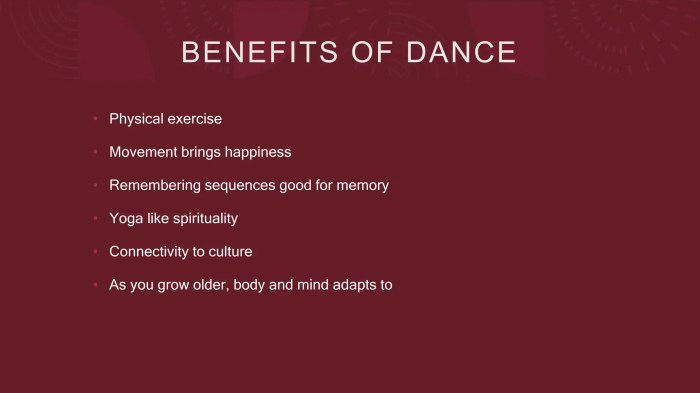
In conclusion, the mental benefits of dancing backed by research offer a compelling case for incorporating dance into our lives as a way to enhance our overall well-being. From stress reduction to improved cognitive functions, the positive effects of dancing on the mind are undeniable.
So why wait? Put on your dancing shoes and reap the mental rewards that this art form has to offer.
General Inquiries
How does dancing impact cognitive functions?
Dancing has been shown to improve cognitive functions such as memory, attention, and executive function through its combination of physical activity, coordination, and social interaction.
Can dance therapy help with psychological issues?
Yes, dance therapy is a form of expressive therapy that uses movement to improve emotional, cognitive, and social integration, making it effective in addressing various psychological issues.
What are some stress management techniques within dancing?
Engaging in rhythmic and repetitive movements, focusing on breathing techniques, and expressing emotions through dance are some stress management techniques that dancing offers.